Skincare for anti ageing: ingredients and sun protection

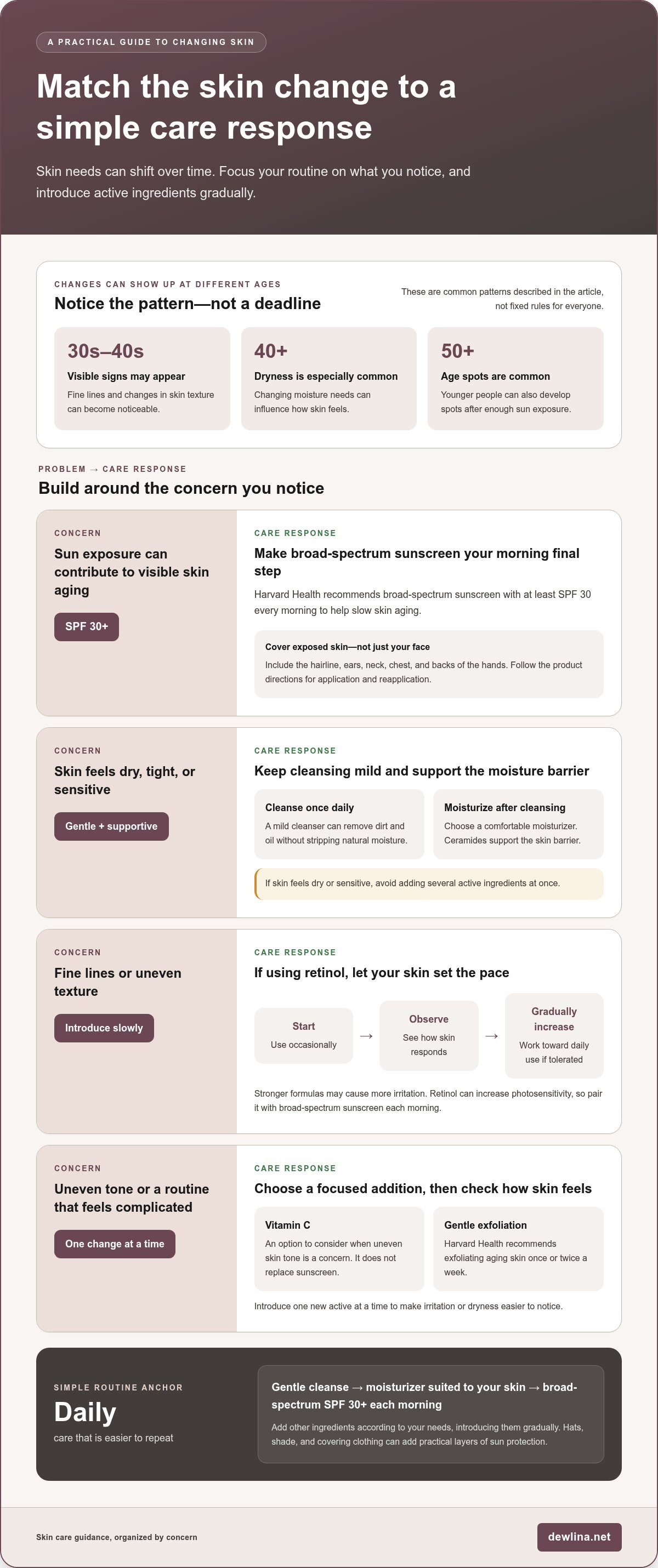
Skin doesn’t age in just one way. Visible signs often appear in the 30s and 40s, while dryness is especially common from age 40 and age spots are common after 50. Good skincare for anti ageing pairs daily sun protection with ingredients that support hydration and the skin barrier.
It’s natural to notice fine lines, a change in texture or skin that feels drier than it used to. A steady routine can help care for these changes without making skincare feel complicated. Harvard Health recommends applying broad-spectrum sunscreen with at least SPF 30 every morning to help slow skin aging.
This guide explains how skin can change with age and why sun protection matters. It covers ingredients such as peptides, collagen, hyaluronic acid, vitamin C, retinol, and ceramides, and how to use them in a simple routine. You’ll find practical guidance on daily care, from sunscreen to moisturizers, with a closer look at peptides and collagen support.
Key Takeaways
- Notice how dryness, fine lines and age spots can change over time, then shape your routine around your skin’s current needs.
- Make broad-spectrum sunscreen with at least SPF 30 part of your morning routine; Harvard Health recommends it to help slow visible skin aging.
- Keep cleansing gentle, and learn how occasional exfoliation can fit into a routine without making it feel complicated.
- Explore how hyaluronic acid, vitamin C, retinol and ceramides can play different roles in an age-supportive routine.
- See how peptides and collagen-focused moisturizers can fit into everyday care, and where a balm stick may be a convenient addition.
1. What causes skin to visibly age?
Skin changes with time, sun exposure, and shifts in its natural moisture barrier. Visible signs often appear in the 30s and 40s. Dry skin is especially common from age 40, while age spots are common after 50. Younger people can also develop age spots after enough sun exposure. These changes help guide a routine around your skin’s current needs.
Use a mild cleanser once daily to remove dirt and oil without stripping the skin’s natural moisture. Harvard Health recommends this approach for aging skin. If your skin feels dry or sensitive, choose a comfortable moisturizer and avoid adding several active ingredients at once. Ceramides support the skin barrier, so they’re a useful ingredient to look for in a moisturizer.
Retinoids, including retinol, are used in routines for fine lines and uneven texture. Products come in different strengths, and stronger formulas may cause more irritation. Start with occasional use, see how your skin responds, then gradually increase toward daily application. This gradual approach can help reduce irritation. Pair retinol with broad-spectrum sunscreen each morning, since it can increase photosensitivity.
Vitamin C is another ingredient to consider when uneven skin tone is a concern. The routine outlined here recommends incorporating it in your 30s. Use one new active at a time, so it’s easier to notice irritation or dryness. Gentle exfoliation can also fit: Harvard Health recommends exfoliating aging skin once or twice a week.
Menopause can bring changes in skin moisture and comfort. It officially begins one year after a person’s last period. For women over 50, extra hydration, ceramides, and lipids can support a more comfortable routine. Apply moisturizer after cleansing, and extend skincare down the neck and chest. A Collagen Peptide Daily Moisturizer is one moisturizer option to consider within a simple routine.
How much do effective anti-aging skincare products typically cost in the United States? There’s no single typical cost across products. Prices vary by formula, ingredients, and product type, so compare what each item is designed to do with the needs of your routine.
How long does anti-aging skincare take to show results? Moisturizer can make dry skin feel more comfortable after application. Changes in fine lines or skin tone depend on the ingredient and consistent use over time.
Which products are safe during pregnancy or breastfeeding? Keep your routine simple with a gentle cleanser, moisturizer, and broad-spectrum sunscreen. Avoid retinoids during pregnancy or breastfeeding, and discuss active ingredients with a qualified health professional.
2. Daily sunscreen and sun protection
Make sunscreen the final step in your morning skin care routine. Harvard Health recommends broad-spectrum sunscreen with at least SPF 30 every morning to help slow skin aging. Broad-spectrum protection covers both UVA and UVB rays. Choose a formula you enjoy applying, since comfort makes daily use easier to maintain.
Apply sunscreen to all exposed skin, not just your face. Extend your skin care down over your neck and chest, and cover the backs of your hands. These areas receive regular daylight exposure and can show changes in appearance over time. Apply sunscreen after moisturizer, following the product directions.
Daily moisturizers with SPF combine hydration and sun protection in one step. They can suit a simple morning routine, especially when the texture feels smooth and comfortable. Check that the label says broad-spectrum and provides at least SPF 30. If your moisturizer has no SPF, layer a separate broad-spectrum sunscreen over it.
Mineral and chemical sunscreens offer different formula styles. Mineral options use zinc oxide or titanium dioxide as active ingredients; chemical options use other UV-filter ingredients. Texture, finish, and how the formula sits under makeup may help guide your choice. Whichever type you prefer, look for broad-spectrum protection and at least SPF 30.
Apply enough sunscreen to cover every exposed area evenly, including the hairline, ears, neck, and hands. Follow the package directions for application and reapplication, especially during extended time outdoors. A hat, shade, and covering clothing can add practical layers of sun protection.
Start building this habit in your 20s, when a routine focused on sun protection can become part of everyday care. If you use retinol, apply broad-spectrum sunscreen each morning to protect skin from increased photosensitivity. Vitamin C may brighten the look of uneven skin tone, but it doesn’t replace sunscreen. Keep the steps distinct: apply your chosen skin care products, then protect exposed skin.
For an easy routine, choose a moisturizer and sunscreen that work well together without feeling heavy. A Collagen Peptide Daily Moisturizer can provide a moisturizing step, while broad-spectrum sunscreen remains essential for sun protection. Explore everyday skincare essentials as you shape a routine that feels simple to repeat.
3. What are fine lines and wrinkles?
Fine lines are shallow creases that may become more noticeable as skin changes. Wrinkles are deeper folds, often visible around the eyes, forehead, and mouth. Repeated facial expressions can crease certain areas, while dryness can make fine lines look more pronounced. Where lines appear and how your skin feels can help you shape a practical care routine.
Treat the eye area gently. The skin there can feel dry, and rubbing may cause irritation. An eye cream or simple moisturizer can ease dryness and temporarily make fine lines look less noticeable. Apply a small amount with a light tapping motion, keeping it out of your eyes. Dark circles have different possible causes, so an eye cream may not address every concern.
For daily wrinkle prevention, combine gentle cleansing, moisturizer, and broad-spectrum sunscreen. Sun protection helps limit further sun-related changes to the skin’s appearance. Avoid scrubbing or layering several strong products at once, especially around the eyes. If a product stings or causes persistent redness, pause it instead of adding another active ingredient. A steady routine is easier to follow than frequent product changes.
Over-the-counter products, prescription treatments, and procedures work in different ways. Skin care products are applied at home, prescription treatments involve medicines selected for an individual, and procedures use clinical techniques. The right comparison depends on your concern, such as surface dryness, expression lines, or changes in facial volume.
Procedural options differ in how long their effects last. The effects of botulinum toxin injections for expression wrinkles last about three to six months. Results from hyaluronic acid soft tissue fillers can last from six months to two years. These approaches are not interchangeable: injections address expression wrinkles, while fillers add soft tissue volume. Expected duration depends on the treatment type.
Match your expectations to the concern you’re addressing. An eye cream can moisturize dry skin, while sunscreen supports a protective routine. Neither is equivalent to a procedure. If dark circles or wrinkles remain your main focus, note where they appear, when they’re most visible, and whether dryness changes their appearance. These details help clarify which care approach fits your goal.
4. Hyaluronic acid, vitamin C, retinol, peptides, and ceramides
Each ingredient has a different role in a care routine. Hyaluronic acid supports hydration, while ceramides help support the skin barrier. Vitamin C is often chosen for dullness and uneven skin tone. Retinol, a type of retinoid, is used in routines targeting signs of aging. Peptides are another option in moisturizers and serums. Choose ingredients based on your main concern instead of adding every active at once.
Hyaluronic acid is a practical option when skin feels tight or looks dehydrated. After cleansing, apply a product containing it, then follow with moisturizer to keep skin comfortable. Ceramides can complement this step, especially when dryness is a concern. For mature skin, extra hydration, ceramides, and lipids can support a more comfortable routine.
Vitamin C can fit a morning routine focused on dullness or uneven tone. The guidance in this article recommends incorporating vitamin C in your 30s. Apply it as directed, then use broad-spectrum sunscreen each morning. Vitamin C doesn’t replace sun protection. If your routine already includes several products, introduce vitamin C separately so you can notice how your skin responds.
Retinoids include retinol and related ingredients used in skincare routines for wrinkles and texture. The formula’s strength and your skin’s tolerance affect how often to apply it. Start gradually rather than using retinol every day from the beginning, then increase use as your skin adjusts. This gradual approach can help reduce irritation. Apply retinol as directed, and use broad-spectrum sunscreen each morning because it can increase photosensitivity.
Peptides are short chains of amino acids used in skincare formulas. They appear in some serums and moisturizers and can complement hydration-focused care, but they don’t replace sunscreen or moisturizer. Keep your routine easy to follow: choose one peptide product, apply it according to its directions, and avoid introducing several new actives on the same day.
What are the side effects and risks of retinoids and other anti-aging ingredients? Retinol can irritate skin, which is why gradual use is recommended. Other active ingredients may also feel uncomfortable for some people. Introduce products one at a time, and pause anything that causes persistent irritation.
A simple order makes these ingredients easier to manage. Cleanse first, apply a chosen serum such as hyaluronic acid, vitamin C, or peptides, then use moisturizer. Introduce retinol gradually and pair it with morning sunscreen. If dryness is your main concern, prioritize moisturizer and ceramides before adding another active. A dermatologist can help if irritation persists or several skin concerns make choosing ingredients difficult.
5. Peptides and collagen support
Peptides and collagen often appear together on skincare labels, but they’re different ingredients. Peptides are short chains of amino acids used in cosmetic formulas. Collagen is a protein found naturally in skin and other body tissues. In a moisturizer or serum, these ingredients are part of the formula, not a promise of a particular result. Read the full ingredient list and choose based on your routine’s needs.
Collagen-focused products may suit a routine where hydration and a softer skin feel are priorities. A moisturizer adds moisture, while a serum offers another way to include peptides. Check how each product fits: apply serum according to its directions, then use moisturizer. This simple order keeps peptide products from becoming a long, hard-to-follow lineup.
Peptide formulas vary, so look beyond the word “peptide” on the front label. Check the ingredient list, product format, and directions. If you already use retinol, avoid adding several new active products at once. Introduce one new formula at a time, then observe how your skin feels. This makes it easier to identify which step suits your routine.
Collagen support works best as one part of everyday skin care. Pair a hydrating moisturizer with gentle cleansing and sun protection. Retinol can also be part of a routine, but introduce it gradually and use sunscreen each morning. These steps address different needs: moisture, active ingredients, and protection from daily sun exposure. For skincare for anti ageing, think of peptides and collagen as ingredients within a routine, not substitutes for its other steps.
Free radicals are molecules associated with oxidative stress. Antioxidants such as vitamin C are commonly included in skincare formulas for this reason. They serve a different role from collagen and peptides. A balanced routine might include vitamin C in the morning, sunscreen for protection, and a peptide moisturizer when skin needs hydration. Follow each product’s directions and avoid layering multiple new actives at once.
Keep your goal practical: choose ingredients that fit your concern, then build a routine you can repeat. For example, a peptide serum and moisturizer may suit someone prioritizing hydration, while another person may prefer fewer steps. The word “collagen” on a label alone doesn’t tell you how a product will feel or fit. Texture, directions, and the rest of your routine matter too. Skincare for anti ageing can stay simple when every product has a clear role.
Explore peptide skincare options to find a formula that fits comfortably into your daily routine.
Dewlina: Dr.Melaxin Collagen Wrinkle Balm Stick
Dr.Melaxin Collagen Wrinkle Balm Stick is an option to explore if you’re looking for a collagen-focused addition to your skincare routine. Its balm stick format offers another way to incorporate wrinkle-focused care alongside daily moisturizer and sun protection. Keep expectations grounded: a product name alone doesn’t establish how it will suit your skin, so consider its listed ingredients and directions as part of your routine.
If hydration is your main focus, browse NIDA Youthful Formula Moisturizing Face Cream and Collagen Peptide Daily Moisturizer. Choose based on the role you want each product to play, and keep sunscreen as a separate morning step.
Visit dewlina.net to explore these skincare options.
Make your next skincare step your own
A routine is easier to maintain when every product has a clear place. As you refine your approach to skincare for anti ageing, choose care that fits your priorities, whether that’s a moisturizing step or a collagen-focused product. Keep your routine comfortable and familiar, and make changes thoughtfully rather than adding several new products at once.
Dewlina offers Dr.Melaxin Collagen Wrinkle Balm Stick, NIDA Youthful Formula Moisturizing Face Cream, and Collagen Peptide Daily Moisturizer. These options give you different formats to consider as you build a routine around your preferences. Read each product’s details and directions to decide what feels like a natural fit for your daily care.
If you’re ready to explore your options, visit Dewlina for skincare help. Take your time, choose what suits your routine, and let everyday care feel simple.
Frequently Asked Questions
How does your skin change as you get older?
Skin may become drier, feel less supple, or show more uneven tone over time, though these changes don’t appear in the same order for everyone. You might first notice that your usual cleanser leaves your face feeling tight, or that makeup settles into lines around your eyes. Treat these observations as cues to adjust product texture or routine steps, rather than automatically adding stronger ingredients.
Retinoid or retinol?
Retinoid is the broader term; retinol is one type of retinoid used in skincare products. Labels can be confusing, so check the ingredient list rather than relying only on front-label claims. When comparing products, consider the formula’s directions and how it fits your current routine. A beginner may prefer introducing one retinol product gradually rather than combining it with several unfamiliar actives.
WHAT ARE THE FIRST SIGNS OF AGING IN SKIN?
Early visible changes can include fine lines, dryness, and uneven skin tone. You may notice a crease near your eyes when smiling, or skin that feels less comfortable after washing. Age spots can also appear, particularly after sun exposure. These signs can have different causes, so note where they appear and what seems to affect them. This can help you choose between more hydration, sun protection, or another routine change.
What are fine lines and wrinkles?
Fine lines are shallow creases, while wrinkles are more noticeable folds in the skin. Their appearance can vary with facial movement, dryness, and lighting. A line may look clearer when skin feels dry, for instance, or appear mainly when you smile. Notice whether a crease appears at rest or during expression. This helps you describe your concern and decide which care approach to explore.
What causes skin to visibly age?
Visible skin changes reflect a mix of natural aging and outside influences. Sun exposure can contribute to uneven tone and age spots, while repeated facial movements create creases in expressive areas. Dryness can make the surface look less smooth. Hormonal shifts, including menopause, can also affect skin comfort. Because causes differ, a routine works best when it responds to the concern you notice, rather than treating every change as the same issue.
What skincare ingredients have the best evidence for reducing signs of aging?
No single ingredient addresses every visible concern. Broad-spectrum sunscreen is central to prevention; Harvard Health recommends at least SPF 30 each morning to help slow skin aging. Retinol, vitamin C, and moisturizers with ceramides serve different routine roles. For example, someone focused on dry-feeling skin may prioritize moisturizer, while someone concerned about uneven tone may consider vitamin C. Match ingredients to your goal and introduce them thoughtfully.
How do retinoids help with wrinkles, and how should beginners use them?
Retinoids, including retinol, are used in routines targeting wrinkles and uneven texture. Beginners can follow the product directions and introduce retinol gradually, rather than applying it every night right away. Keep the rest of your routine simple while you see how your skin responds, and avoid introducing another new active at the same time. Use broad-spectrum sunscreen each morning, since retinol can increase photosensitivity.
What sunscreen SPF and application routine help prevent premature skin aging?
Choose broad-spectrum sunscreen with at least SPF 30 and apply it each morning. After moisturizer, cover exposed areas evenly, including the face, neck, chest, and backs of the hands. Follow the package directions for application and reapplication. For time outdoors, add practical protection such as shade, a hat, or covering clothing. Make sunscreen the final skin-care step before makeup, if you wear it, so it’s easy to remember.