Moisturizers for Different Skin Types and Concerns

The richest cream isn’t always the best moisturizer, especially under makeup. Choose a texture that suits your skin and settles comfortably before you apply foundation. A lighter layer may feel easier to wear, while drier skin may prefer a creamier finish.
It makes sense to want hydration without a slippery feel, pilling, or makeup that shifts. The right moisturizer depends on your skin’s needs, the formula’s ingredients, and how you layer it in your routine.
Here, you’ll find practical ways to match a moisturizer to different skin types and concerns, understand humectants, emollients, and occlusives, and compare lighter and richer textures. You’ll also learn how to apply it under makeup for a comfortable, uncomplicated routine.
Key Takeaways
- Match the formula’s feel to your skin’s needs, then adjust as those needs change.
- Read ingredient lists with a purpose: focus on what supports the finish and comfort you want.
- Learn how humectants, emollients, and occlusives play different roles in a simple routine.
- Apply skincare in a comfortable order and give each layer time to settle before the next.
- For makeup days, look for a layer that feels settled and smooth beneath your chosen base.
1. Moisturizers for different skin types and concerns
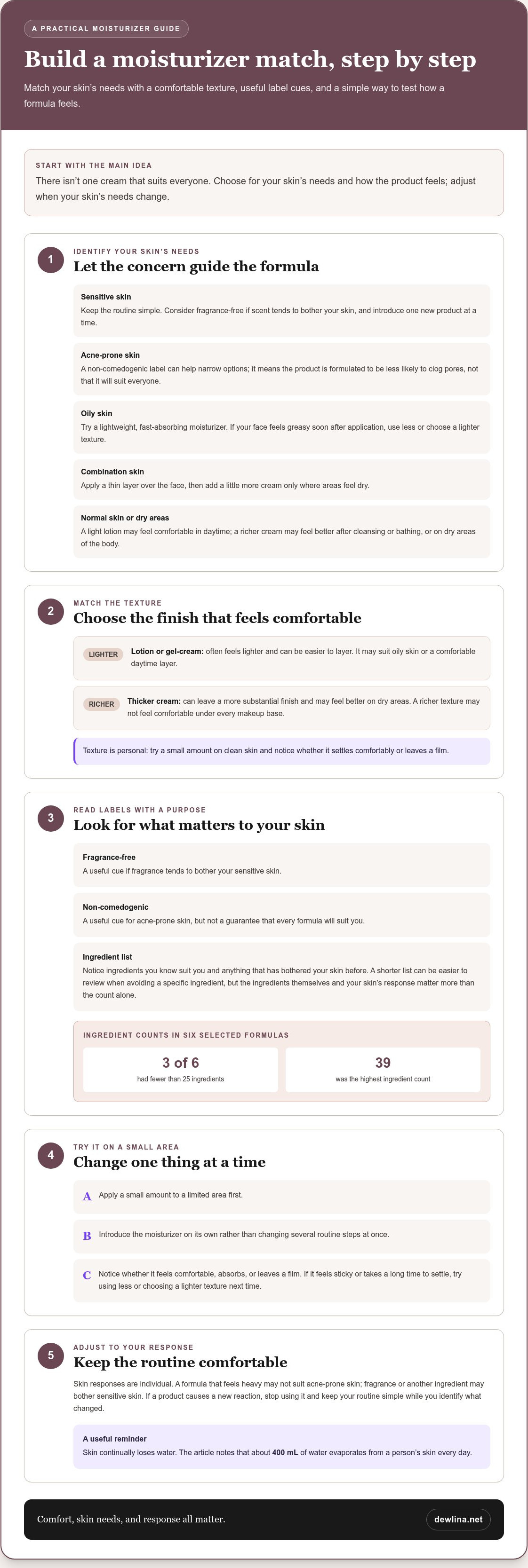
There isn’t one dermatologist-recommended face and body cream that suits everyone. Choose based on your skin’s needs and how the product feels, then try it on a small area first. For example, a lighter lotion may feel comfortable on the face, while a richer cream may suit dry areas on the body.
For sensitive skin, keep your routine simple. Choose a fragrance-free formula if scent tends to bother your skin, and introduce one new product at a time. First, apply a small amount to a limited area. For normal skin, focus on comfort: a light lotion may suit daytime, while a richer cream may feel better after cleansing or bathing.
Combination skin often feels different across the face. The forehead, nose, and chin may become shiny, while the cheeks feel tight. Apply a thin layer over your face, then add a little more cream only to dry areas. This targeted approach may feel more balanced than applying a thick layer everywhere.
For acne-prone skin, a non-comedogenic label can help narrow your options. It indicates that the product is formulated to be less likely to clog pores, but it doesn’t guarantee that every formula will suit everyone. Choose a lighter lotion or gel-cream, and notice how your skin responds in areas where breakouts commonly appear.
Oily skin can still benefit from a comfortable layer of hydration. A lightweight, fast-absorbing moisturizer may feel less heavy than a rich balm. Start with a small amount, especially across your nose and forehead. If your face feels greasy soon after application, try using less or choosing a lighter texture rather than skipping hydration entirely.
Fragrance-free and non-comedogenic are useful label cues for sensitive and acne-prone skin, respectively, but they aren’t guarantees. Ingredient combinations and individual skin responses still matter. Someone sensitive to fragrance, for example, may prefer an unscented cream, while someone prone to clogged pores may choose a non-comedogenic lotion.
The cost of face cream in the United States depends on the container size, formula, and retailer. Compare the amount in the container and the texture you’ll use regularly rather than choosing by price alone.
A skincare product can contribute to clogged pores, irritation, or an allergic reaction. A formula that feels heavy may not suit acne-prone skin, while fragrance or another ingredient may bother sensitive skin. Stop using a product that causes a new reaction, and keep your routine simple while you identify what changed.
The best choice depends on your skin’s needs: a lighter lotion may suit the face, while a richer cream may work well on dry areas of the body. For sensitive skin, consider a simple fragrance-free formula; for acne-prone skin, look for a non-comedogenic label; for oily skin, try a lightweight lotion or gel-cream.
The best choice depends on what feels comfortable and how your skin responds. About 400 mL of water evaporates from a person's skin every day, a reminder that skin continually loses water.
2. Product ingredients and textures
Start with the ingredient list, then consider how the cream feels on your skin. Two formulas can look equally rich in a jar but spread differently. A lotion often feels lighter and is easier to layer, while a thicker cream can leave a more substantial finish. Try a small amount on clean skin and notice whether it absorbs comfortably or leaves a film. The best moisturizer for your routine should feel right for its intended use and time of day.
Ingredient counts offer one way to compare formulas, but they don’t tell the whole story. Among six selected formulas, three had fewer than 25 ingredients, while the highest count was 39. A shorter list may be easier to review if you’re avoiding a particular ingredient. Still, the specific ingredients and your skin’s response matter more than the count alone.
Read labels for ingredients you know suit you, and note anything that has bothered your skin before. Fragrance, for example, can be a concern for some people with sensitive skin. If you’re trying an unfamiliar moisturizer, introduce it on its own rather than changing several steps at once. That makes it easier to notice whether the formula feels comfortable.
Active ingredients can affect how a formula feels, too. Some products containing lactic acid can sting, according to Harvard Health Publishing. If a product causes discomfort, stop using it and return to a simpler routine. A gentle, plain-textured cream may be a better fit while your skin settles.
Texture can guide your choice as much as the label. A light lotion may sit comfortably beneath other skincare, while a richer cream may feel better on areas that tend to get dry. Apply a thin layer first. If it feels sticky or takes a long time to settle, try using less or choosing a lighter texture next time.
For a face cream with SPF, read the sun-protection details and follow the product’s directions for use. Whether it suits your day depends on how you apply it and your sun exposure. Consider time outdoors and uncovered areas when planning sun protection. Don’t assume a moisturizer with SPF automatically replaces every other sun-protection step in your routine.
Compare the ingredient list, texture, and intended use together. A simple daytime lotion and a richer evening cream, for example, can serve different needs. Choose a moisturizer that feels comfortable in the role you want it to fill, rather than expecting one texture to suit every moment.
3. Humectants, emollients, and occlusives
Ingredient labels are easier to understand once you know the three roles a face cream can play. Humectants draw in moisture and help hydrate skin. Emollients soften and smooth its surface. Occlusives help seal in moisture by forming a protective layer. One moisturizer can combine all three roles, while another may have a lighter or richer feel. The balance helps explain why two products with similar claims can feel different.
Hyaluronic acid is a familiar humectant. It draws in moisture, helping skin feel hydrated. Glycerin is another example you may see on ingredient lists. Humectants can suit a lightweight lotion because they support hydration without relying on a heavy finish. When comparing moisturizers, look for these ingredients, then consider the full formula and how it feels after application.
Emollients help soften rough-feeling skin and give a cream a smoother glide. Plant oils and fatty ingredients are examples you may see on labels. Their presence can make a formula feel richer, but the overall texture depends on the full blend. If a cream feels too heavy across your forehead, try applying it only to drier areas, such as your cheeks.
Occlusives help reduce moisture loss by creating a layer over the skin. Petroleum jelly is a familiar example. According to Harvard Health Publishing, petroleum jelly is one of the most effective options, especially when used right after bathing to seal in moisture. A thin layer can be useful on dry patches, though its heavier finish may not suit every daytime routine.
Think of these ingredient groups as complementary, not interchangeable. A humectant such as hyaluronic acid draws in moisture, an emollient smooths the surface, and an occlusive helps hold moisture in place. Check the ingredient list for examples of each role, then decide whether your skin needs a lighter, hydration-focused feel or a more protective finish.
Application order can help these ingredients work together. After washing, gently pat your skin so it isn’t dripping wet. Apply a humectant-containing lotion, then use a richer cream over dry-feeling areas. If you use petroleum jelly, reserve a small amount for a dry patch or apply it after bathing to help seal in moisture.
Try one change at a time. Keep your usual routine and add a cream with hyaluronic acid, for example, or apply an occlusive only to dry spots. Notice whether your skin feels comfortable through the day and whether the texture suits your routine. This simple comparison helps you choose a moisturizer based on its ingredient roles, not just its name or claims.
4. Moisturizer application and routine
A simple routine is easier to follow when each product has a clear place. Start by cleansing, then apply any lightweight treatments before your face cream. Finish daytime skincare with sun protection. In the evening, cleanse away makeup and daily buildup, apply your usual treatments, then smooth on cream. This order helps prevent richer textures from sitting between clean skin and lighter products.
After cleansing, gently pat your face with a clean towel. Leave it slightly damp rather than rubbing until it feels tight. Spread a thin layer of cream over your face and neck using light strokes. Include the sides of your nose and the skin near your jaw. Avoid getting skincare directly in your eyes, and follow product directions for sensitive areas.
Using more product doesn’t always feel more comfortable. Start with a small amount and add a little more if dry areas still feel tight. If your forehead becomes slick or your face feels coated, use less there next time. A lighter touch across the T-zone and a little extra on dry cheeks can help balance your routine.
Let each layer settle before applying the next. For example, apply a watery serum first, let it absorb, then use cream. If products pill or roll, try using less, waiting longer between layers, or simplifying your routine. Changing one step at a time makes it easier to tell whether the issue comes from the amount, texture, or combination of products.
Tailor morning and evening routines to their different purposes. In the morning, use a comfortable layer that won’t feel heavy under sunscreen or makeup. At night, choose a richer texture if your skin feels dry after cleansing. If you use an exfoliating product, follow its directions and avoid adding several unfamiliar active formulas at once.
Consistency helps you judge whether a product suits you. Follow the same basic routine for several days, and notice whether your skin feels comfortable after washing and throughout the day. If you introduce a new cream, make it your only change at first. Stop using it if you notice a new reaction, and return to familiar products while your skin settles.
For your body, apply cream after bathing while your skin is still slightly damp. Smooth it over areas that feel dry, such as your hands, elbows, or legs. Keep a separate face formula if its texture suits your face better. A steady, uncomplicated routine is easier to maintain than adding products without a clear purpose.
5. Moisturizers under makeup
Makeup sits more smoothly when skincare has settled, rather than feeling slippery. Start with clean skin, then apply a thin layer of face cream over your face and neck. Use less around your nose and forehead if those areas become shiny. Let the layer settle before applying sunscreen, primer, or foundation. The right amount depends on your skin and the texture of each product.
Layer products from lightest to richest. For example, apply a watery serum first, then cream, followed by sunscreen during the day. Keep each layer thin and let it settle before applying the next. A thick layer under primer can feel tacky or cause products to roll. If that happens, use less or simplify the layers rather than adding more products.
Match the finish to your makeup. A lightweight lotion can work well under a fluid foundation, while a richer cream may feel more comfortable under a drier, fuller-coverage base. Try the combination on a small area first. If foundation separates around your nose or clings to dry patches, adjust the amount of cream or choose a different texture.
Application technique matters, too. Smooth cream gently over your skin, then press it in with clean fingertips instead of rubbing vigorously. Apply foundation with a clean sponge or brush using light, even motions. Dragging a tool across a fresh skincare layer can disturb the surface and leave makeup uneven, especially around your cheeks and jaw.
Build a simple routine for makeup days: cleanse, apply face cream, use sunscreen as directed on its label, then add primer and makeup if you like. If your sunscreen already feels rich, apply a lighter layer of cream underneath. Don’t skip sun protection just to make makeup sit better. Adjust the skincare texture instead.
Check the result in natural light before applying more foundation. A shiny forehead may need less cream next time, while makeup catching on your cheeks may mean those areas need a little more moisture. Change one step at a time, such as reducing the cream or switching the primer. That makes it easier to identify what improves the finish.
Clean tools also help create an even application. Makeup residue on a brush can affect how foundation spreads, so make brush cleaning part of your routine. Explore makeup brush cleaning tools to keep this step simple. With a light skincare layer, a settled sunscreen, and clean tools, makeup has a smoother base to work with.
Dewlina: Dr.Melaxin Collagen Wrinkle Balm Stick
Dewlina’s Dr.Melaxin Collagen Wrinkle Balm Stick offers a balm-stick format for a routine that includes targeted skincare. Compare it with your usual face cream by considering the format, texture, and how each product fits into your day. For a cream-based option, Dewlina also offers NIDA Youthful Formula Moisturizing Face Cream and Collagen Peptide Daily Moisturizer. Choose based on the texture you prefer and the role you want the product to play. A balm stick and a face cream are different formats, so consider how each fits into your existing routine. Explore the Dr.Melaxin Collagen Wrinkle Balm Stick and browse Dewlina’s skincare range.
Make Your Next Skincare Step Simple
Your routine doesn’t need to be complicated to feel considered. Let comfort, texture, and how you plan to wear makeup guide your next choice. If you’re ready to try a different moisturizer, browse Dewlina’s face-care options for products that fit your everyday routine.
Dewlina offers the Dr.Melaxin Collagen Wrinkle Balm Stick, NIDA Youthful Formula Moisturizing Face Cream, and Collagen Peptide Daily Moisturizer. Explore the options and choose a practical next step for your routine.
Browse Dewlina’s skincare offerings and take the next step in a way that feels right for you.
Frequently Asked Questions
How to choose a moisturizer for dry, oily, sensitive, or acne-prone skin?
Choose a moisturizer based on how your skin feels after cleansing and throughout the day. For dry areas, try a cream that feels comfortable after application. For an oily T-zone, start with a lighter texture and a small amount. Sensitive skin may do better with a simple formula, while acne-prone skin can benefit from a non-comedogenic label. Introduce one new product at a time so you can notice how your skin responds.
What moisturizer ingredients should I look for or avoid?
Look for ingredients that suit your routine, and avoid ones you already know irritate your skin. If a product with fragrance caused discomfort in the past, for example, compare labels for “fragrance” or “parfum.” Keep your routine easy to assess by introducing one new formula at a time. Avoid starting several products with active ingredients together, since that makes it harder to identify which one is causing a problem.
What is the difference between moisturizer cream, lotion, gel, and ointment?
Creams and lotions are common leave-on formats, while gels tend to feel lighter and ointments usually feel richer and more protective. A gel may suit someone who dislikes a noticeable finish. A cream can work as an everyday face or body option, while an ointment may be more useful on a small, very dry patch. Choose based on the area you’re treating and the finish you’re comfortable wearing.
What are the best dermatologist-recommended moisturizers for face and body?
There isn’t one moisturizer that suits everyone. Choose based on your skin’s needs: a lighter lotion may suit the face, while a richer cream may work well on dry areas of the body.
How much does moisturizer cost in the United States?
The cost depends on the container size, formula, and retailer. Compare the amount in the container and the texture you’ll use regularly rather than choosing by price alone.