Korean Makeup Products for Face, Lips and Eyes

More coverage isn’t always the goal: Korean makeup products often favor sheer, buildable layers and a fresh, naturally radiant finish. The difference from Western makeup is usually one of emphasis, not a strict divide. Korean looks often let skin show through, while makeup in both traditions can range from subtle to bold.
If you like makeup that feels light and easy to adjust, this approach may suit you. Learn how Korean makeup differs from Western makeup and how to choose face, lip, and eye products for your routine. From complexion products and gradient lips to soft eye details, focus on the styles and steps that feel right for you.
Key Takeaways
- Choose complexion products by the finish and coverage you want, then build light layers where you need them.
- Try a gradient lip by concentrating color at the center and softly blending it outward.
- Place blush just below the eyes and above the apples of your cheeks for a lifted look.
- Keep powder focused on areas that tend to get oily or crease, rather than applying it everywhere.
- Explore simple additions like a color-changing lip oil or a balm stick to find what fits your everyday routine.
What is the difference between Korean makeup and Western makeup?
The difference is usually the finish and how products are layered, not a fixed rule about where makeup comes from. Korean looks often emphasize hydrated, healthy-looking skin, while Western makeup spans sheer everyday coverage to sculpted, full-coverage styles. Both approaches can be soft or bold. Your preferred texture and finish are more useful guides than a label alone.
For a Korean-inspired look, think thin layers and a fresh glow. The “glass skin 2.0” trend pairs natural radiance with a healthy-looking complexion. Cushion foundations suit people who like applying and building coverage in light passes. For a more defined result, add coverage only where you want it, then keep the rest of the base sheer. These choices can help makeup sit lightly alongside skincare.
Choose by routine and makeup style rather than popularity alone. For a soft, luminous finish, explore lightweight base products and cushion foundations. If you prefer stronger coverage, look for a buildable foundation and apply it gradually. For playful, detailed eye makeup, try aegyo sal, which subtly defines the small puffy area beneath the eyes that becomes more noticeable when smiling. These are style options, not rules tied to an audience or brand.
Brand ranges can vary from complexion-focused lines to collections that also include lip and eye color. Compare products by category, finish, coverage, and texture. A brand’s range may include cushion foundations, concealers, blush, lip color, or eye products. Availability differs between retailers, so assess the actual product type and finish rather than assuming every brand carries the same range.
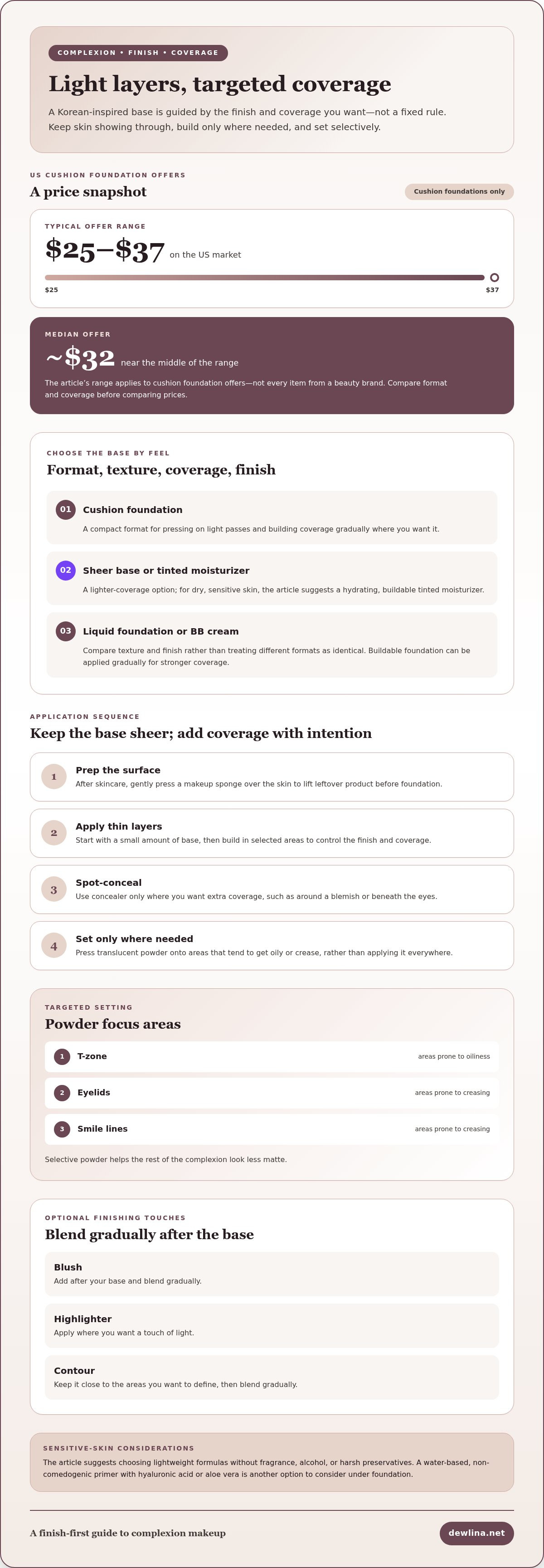
Price depends on the product format and the specific item. On the US market, cushion foundations typically range from $25 to $37, with a median near $32. That range applies to cushion foundation offers, not every item from a beauty brand. Compare the format and coverage before comparing prices. A compact cushion and a liquid foundation may serve different routines, even when both are complexion products.
For a practical choice, start with one category and one goal. Choose a cushion foundation for portable, buildable coverage, or a sheer base for a lighter look. Then pick a finish, such as natural radiance or a more polished appearance. Korean makeup products can suit a simple routine or a detailed one. Compare how each product feels, layers, and supports the look you want.
Face makeup: cushions, foundation, concealer, primer, highlighter, contour, and blush
Korean complexion products often favor lightweight, breathable formulas with sheer, buildable coverage. Choose by the finish you want and how much coverage feels comfortable.
Korean Complexion Products
This category includes cushion and liquid foundations, BB creams, concealers, and primers. Compare texture, coverage, and finish before choosing. For a light base, look for a sheer formula you can build in selected areas. For dry, sensitive skin, a hydrating, buildable tinted moisturizer can provide comfortable coverage without a cakey look.
Cushion Coverage and Finishes
A cushion foundation lets you press product onto the skin in light layers. Start with a small amount, then add coverage where you want it. This gradual approach helps control the finish, whether you prefer a subtle, natural look or more even coverage. A cushion suits routines where compact application matters; liquid foundation offers a different format.
Cushions and BB Creams
Cushion foundations and BB creams both offer lighter-coverage options, but compare their texture and finish rather than treating them as identical. For sensitive skin, choose lightweight formulas without fragrance, alcohol, or harsh preservatives. A water-based, non-comedogenic primer with hyaluronic acid or aloe vera is another option to consider under foundation.
Prep affects how your base sits. After skincare, gently press a makeup sponge over the skin to lift leftover product before applying foundation. Apply your base in thin layers, then use concealer only where you want extra coverage, such as around a blemish or beneath the eyes. This helps keep the overall finish subtle.
Set selectively. Press translucent powder onto areas that tend to get oily or crease, such as the T-zone, eyelids, and smile lines. Applying powder only there helps the rest of your complexion look less matte. Add blush, highlighter, or contour after your base and blend gradually. Keep contour close to the areas you want to define, and apply highlighter where you want a touch of light.
Choose primer by the feel you want beneath foundation. A water-based option may suit a lightweight base, while the foundation’s own texture can guide how much primer to apply. If moisturizer is part of your pre-makeup routine, explore the NIDA Youthful Formula Moisturizing Face Cream as one option.
Lip makeup: tints, gloss, lipstick, oils, liner, stain, and balm
Korean-inspired lip looks range from soft gradients to glossy, full-color finishes. Choose a texture and color intensity that suits your daily routine.
Korean Lip Tints and Glosses
Lip tints and stains add color without the traditional lipstick finish. For a gradient lip, apply tint at the center, then blend outward with a fingertip or brush. Keep the edges soft for a diffused look, or add another layer for more color. A touch of gloss at the center adds a radiant sheen.
Lip Gloss and Balms
Lip gloss adds shine and works alone or over lipstick. Choose clear gloss for a simple finish, or layer tinted gloss over a stain to adjust the color. Balm is useful as a comfortable-feeling step before lipstick. Compare textures and finishes, then apply balm before adding color if you want a more hydrated feel.
Each lip format works differently. Lipstick gives a defined coat of color, while liner shapes the edge or keeps a bolder look crisp. A stain leaves a lighter wash, and an oil adds a smooth, glossy finish. Try one product at a time to see whether you prefer a velvet texture, sheer tint, or reflective shine.
For a soft gradient, start with clean lips and apply a small amount of tint to the center. Tap the color toward the edges instead of drawing a strong outline. Add another layer only where you want deeper color. If the result looks too matte, dab gloss onto the middle. This keeps the edges soft and adds shine where it catches the light.
For more even lip color, use a liner close to your natural lip tone, then fill in with lipstick or stain. Clear gloss adds shine without changing the shade much. For a low-key look, apply balm first and press a little tint over it. These combinations let you adjust color, texture, and shine without changing the rest of your makeup.
Shade choice can change the mood of your look. A muted tint pairs easily with light everyday makeup, while deeper lipstick creates a clearer focal point. When comparing lip shades, consider which colors work with products already in your routine. Try one shade at a time, then choose gloss, balm, or liner to get the finish you want.
Lip tints, blushes, and eyeshadow palettes
Lip, cheek, and eye colors can work together without matching exactly. Choose one feature to lead, such as a vivid lip tint, and keep blush and eyeshadow softer. For a balanced look, repeat a similar undertone across two areas. A warm peach lip, for example, pairs well with peach blush and neutral eyeshadow.
For blush, begin with a small amount and build gradually. Cream blush blends easily with fingertips or a sponge, making it useful for a dewy finish. Place it just under the eyes and slightly above the apples of the cheeks for a lifted, youthful look. Blend the edges toward the temples to connect the color with the rest of your makeup.
Powder blush has a different texture and can be layered over a finished base. Use a soft brush and tap off extra powder before touching the cheeks. Start near the apples, then sweep outward. If you apply cream blush first, let it settle before adding powder blush. This makes the color easier to control and helps prevent applying too much at once.
Setting products can change how blush looks throughout the day. Apply translucent powder only where you tend to get oily or creased, such as the T-zone, eyelids, or smile lines. Keep powder off cheek areas where you want cream blush to look fresh. With powder blush, a light layer of setting powder underneath can create a smoother base.
Choose eyeshadow shades for the look you want, rather than the number of colors in a palette. A compact palette with a light base shade, a mid-tone, and a deeper shade can create a simple everyday eye. Sweep the light shade across the lid, blend the mid-tone into the crease, then apply the deeper color near the lash line. Keep the edges soft for a subtle finish.
Coordinate lip tints and blush by comparing their depth and undertone. A soft rose tint pairs with muted pink cheeks, while a brighter tint can stand out against understated blush. Apply tint in a thin layer, then add more at the center for a diffused effect. This lets you adjust the color without making lip and cheek shades compete.
For a quick routine, choose one focal point and keep the other colors understated. A warm eyeshadow palette can complement a neutral lip and peach blush. A vivid lip tint may work better with soft eye shades and a light touch of cheek color. Check each shade in the same lighting, then adjust placement or blending before adding another layer.
Korean makeup and cosmetics products
Korean beauty includes makeup and skincare, so the products often appear side by side in a routine. A makeup bag might hold a complexion base, lip tint, and blush, while skincare prepares the skin beforehand. The useful distinction is each product’s role: skincare supports preparation, while makeup adds color, coverage, or a chosen finish.
Read the product label before choosing based on an ingredient or texture. Compare whether a base feels lightweight or creamy, and whether its pigment gives sheer or stronger color. If you want hyaluronic acid, look for it in the ingredient list rather than assuming every hydrating product contains it. Match the formula to your preferences and the rest of your routine.
Choose color products by the impact you want. A sheer lip tint adds a light wash, while a more pigmented lipstick creates clearer definition. Blush adds color to the cheeks, and neutral eyeshadow can balance a vivid lip. Pick your favorite feature first, then choose supporting colors that don’t compete with it.
Multi-use formats can simplify a small makeup bag. A tint that works on lips and cheeks, for example, can reduce the number of items you carry. The article’s market research reports that 60% of K-beauty fans seek multi-use, travel-friendly items. Use that preference as a prompt to consider your own routine, not as a rule about what you need.
Consider texture and finish as well as shade. A glossy lip product looks different from a velvet tint, even in a similar color. Cream cheek products also apply differently from powder blush. Compare these details in product descriptions, then choose a format you’ll enjoy using. The right favorite suits your preferred application and finish.
Keep tools in mind when planning a makeup routine. Brushes help apply and blend powder products, while fingers can work well with some cream formulas. Clean tools help prevent old pigment from mixing with a fresh shade. After using a brush for blush or eyeshadow, clean it before switching colors, especially when moving from a deep shade to a pale one.
To build a simple set, start with one base product, one lip color, and one cheek shade. Add an eyeshadow palette only if you’ll use its shades regularly. This keeps your selection focused on products with a clear purpose. Compare ingredients, pigment, texture, and format before choosing. That makes it easier to see how Korean makeup products fit into your everyday beauty routine.
Explore everyday beauty and personal-care essentials to find simple additions for your routine.
Dewlina: Dr.Melaxin Collagen Wrinkle Balm Stick
The Dr.Melaxin Collagen Wrinkle Balm Stick is one option for adding a balm stick to your beauty routine. Choose it if you want a convenient format alongside makeup and daily skincare. Dewlina also offers NIDA Youthful Formula Moisturizing Face Cream, Collagen Peptide Daily Moisturizer, and Color Changing Lip Oil for other routine steps.
Keep your choices simple: a balm stick, moisturizer, or lip oil can each serve a different purpose in your routine. Pick the format that best fits what you want to use. Browse Dewlina’s everyday beauty essentials at dewlina.net when you’re ready.
Make Your Routine Feel Like Yours
Start your next makeup choice with how you want to feel wearing it. A comfortable routine doesn’t need every trend or product category. Choose one detail to explore, such as a new lip finish or a softer complexion look, and make room for it in your daily routine. Korean makeup products can offer ideas, not rules you need to follow.
For a simple care step alongside makeup, Dewlina offers the Dr.Melaxin Collagen Wrinkle Balm Stick, NIDA Youthful Formula Moisturizing Face Cream, and Collagen Peptide Daily Moisturizer. Choose the format that suits your routine and keep the rest uncomplicated.
Ready to explore? Contact Dewlina about Korean makeup or browse the available beauty essentials at your own pace. A small, thoughtful change can be a lovely place to begin.
Frequently Asked Questions
What are the latest trends in Korean makeup?
Current looks include “glass skin 2.0,” a focus on hydrated-looking skin with natural radiance. For a fresh eye detail, aegyo sal subtly defines the small area beneath the eyes that shows when smiling. Before makeup, toner pads can cool and refresh skin. Keep translucent powder to areas prone to oil or creasing, rather than using it across the whole face.
What is the best Korean foundation?
The best foundation suits your preferred coverage, finish, and application style. Try a cushion if you like pressing on thin layers, or a liquid formula if you prefer applying with a brush or sponge. For a lighter-looking base, compare sheer, buildable options. Check the shade in natural light, especially along your jawline, before choosing a match.
What is the best Korean makeup for sensitive skin?
Look for lightweight foundation or BB cream without fragrance, alcohol, or harsh preservatives. A water-based, non-comedogenic primer with hyaluronic acid or aloe vera is another option. Keep your routine simple when introducing a new product. For example, try one new base product rather than changing primer, foundation, and concealer together. This makes it easier to notice which formula suits your preferences.
What are the best Korean blushes, eyeshadows, eyeliners, and mascaras?
Choose each product by the effect you want, since “best” depends on your routine and preferred finish. Cream blush suits a dewy look, while powder blush has a different texture. A small eyeshadow palette with neutral shades can work for everyday wear. For eyeliner and mascara, compare application style and how defined you want your eyes, then start with a subtle line or coat.
How much do popular Korean makeup products cost in the United States?
On the US market, cushion foundations typically range from $25 to $37, with a median near $32. That range applies to cushion foundation offers, not every makeup category or brand. Lip tints, blushes, and eye products vary by item and format. Compare the product type, amount, and finish before judging two listings as equivalent. Prices for Dewlina products are shown in its online catalog.
Where can you buy authentic Korean makeup products in the United States?
Choose sellers that clearly identify the product and provide consistent packaging and ingredient information. Dewlina’s online catalog offers beauty and personal-care essentials, including Color Changing Lip Oil. Review each listing to understand the specific item before purchasing. A Korean-inspired style alone doesn’t establish where a product was made, so look for clear origin details if that matters to you.
How do Korean makeup products compare with popular Western makeup brands?
The difference is about common styles, not a strict divide between products. Korean makeup often emphasizes lighter layers and a fresh finish, while Western ranges include sheer looks and highly sculpted coverage. Brands in either market offer varied textures, shades, and formats. Compare each formula and how it applies rather than assuming every product from one region shares the same look.
Which Korean makeup products are suitable for sensitive, oily, dry, or acne-prone skin?
For sensitive skin, look for lightweight base products without fragrance, alcohol, or harsh preservatives. Dry skin may suit a hydrating, buildable tinted moisturizer. For oily areas, focus translucent powder on the T-zone instead of applying it everywhere. If you have acne-prone skin, consider a water-based, non-comedogenic primer and compare ingredients carefully. Choose makeup by texture and finish, not skin type alone.